Beyond the Booth: How Mobile Apps Are Transforming Trade Shows
Trade shows have always been about one thing—bringing people together.
Whether it's buyers meeting exhibitors, brands launching new products, or industry professionals discovering the latest trends, successful events create meaningful business opportunities.
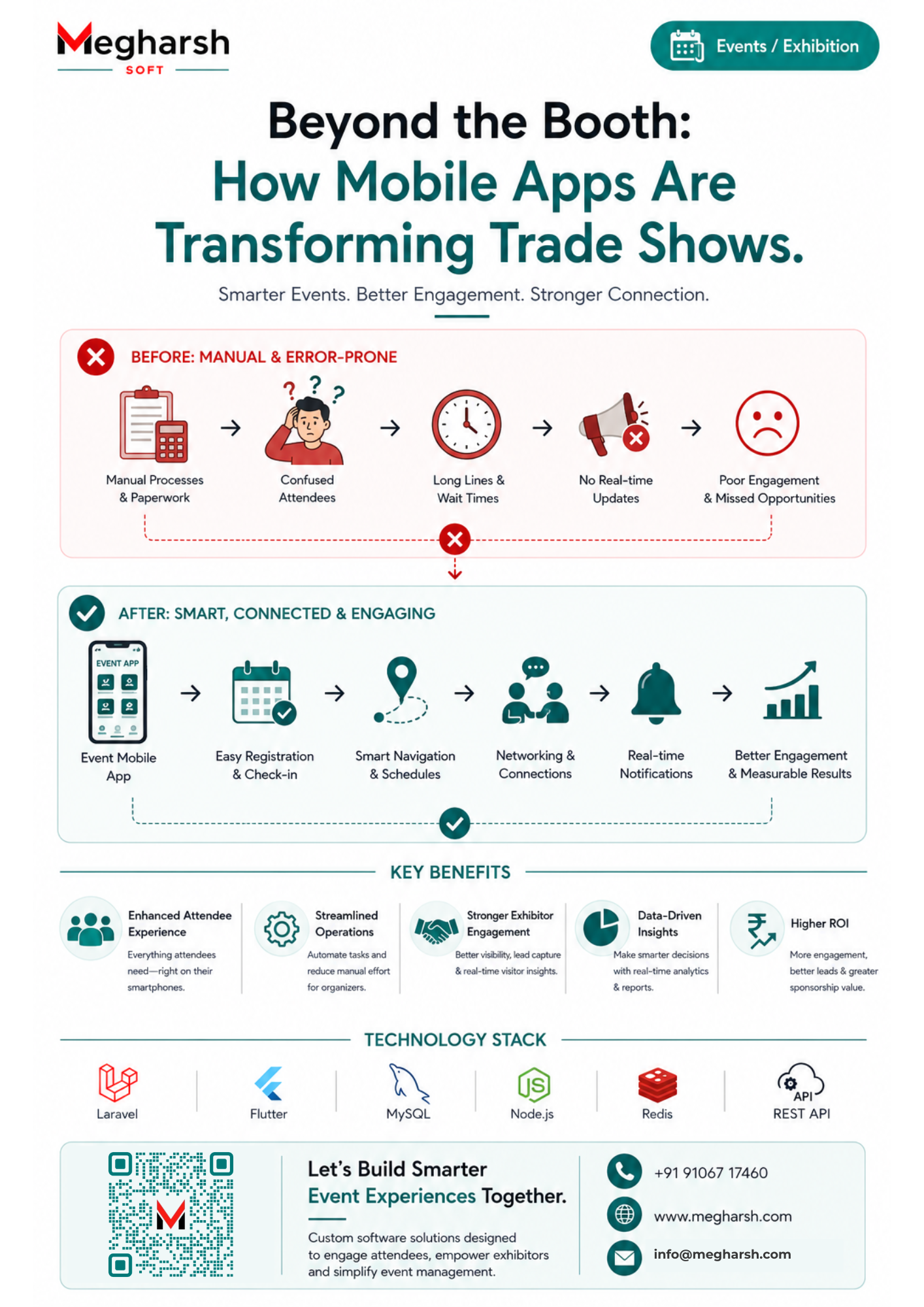
But while exhibitions have evolved over the years, many still rely on outdated processes. Visitors walk around with printed maps, exhibitors struggle to measure booth performance, organizers communicate through scattered channels, and networking opportunities are often left to chance.
Today's attendees expect a different experience. They're used to booking flights, ordering food, and managing their schedules through their smartphones. Naturally, they expect the same level of convenience when attending a large-scale exhibition.
That's why mobile event platforms are becoming one of the biggest drivers of modern trade show success.
Why Traditional Event Management Is Falling Behind
Organizing a trade show involves far more than reserving a venue and inviting exhibitors. Every event brings together multiple stakeholders, each with different goals.
Visitors want to discover brands, attend sessions, and navigate the venue effortlessly. Exhibitors want qualified leads, visitor insights, and better engagement. Media representatives need quick access to event schedules, announcements, and press resources. Meanwhile, organizers are responsible for ensuring everything runs smoothly from registration to the final closing ceremony.
When these processes depend on spreadsheets, printed brochures, or disconnected systems, problems quickly appear:
- Long registration queues
- Difficulty locating exhibitors
- Poor communication between organizers and attendees
- Limited visitor engagement
- No reliable way to measure exhibitor performance
- Delayed event updates
- Manual feedback collection
These issues don't just affect operations—they directly influence how attendees remember the event.
The Shift Toward Digital Event Experiences
The best trade shows today aren't replacing face-to-face interactions. They're enhancing them.
Instead of removing the human element, technology removes the friction that prevents meaningful interactions from happening. A dedicated event platform allows organizers to connect exhibitors, visitors, media personnel, and administrators through one centralized digital experience.
Rather than carrying printed guides or searching for information across different channels, attendees can access everything from a single mobile application. This creates a smoother journey before, during, and even after the event.
A Mobile App Becomes the Event Companion
For modern attendees, a mobile application isn't just a convenience—it's an expectation. From the moment someone registers for an exhibition, the app becomes their personal event assistant.
Visitors can browse exhibitor directories, check event schedules, receive important announcements, and navigate the venue without needing printed materials.
For organizers, this also creates a direct communication channel throughout the event. Instead of relying on loudspeaker announcements or email updates that may go unread, important information reaches attendees instantly through the app. Well-designed mobile app development transforms the entire event experience by making information accessible exactly when attendees need it.
Different Users Need Different Experiences
One of the biggest mistakes event platforms make is treating every user the same. An exhibitor doesn't need the same interface as a visitor. A journalist doesn't need the same tools as an event administrator.
A modern event platform should support role-based access, giving each user a personalized experience:
- Visitors: Explore exhibitors, save favorites, and plan their schedules.
- Exhibitors: Access dashboards to understand booth traffic and visitor engagement.
- Media: Receive dedicated access to press resources, event releases, and announcements.
- Administrators: Manage registrations, users, content, and event activities from a centralized dashboard.
By tailoring the platform to each role, everyone enjoys a simpler and more productive experience.
API Integration Keeps Everything Connected
Large events often use multiple systems for registrations, ticketing, exhibitor management, schedules, and attendee communication. Managing each system separately increases administrative work and creates inconsistencies.
API integration connects these platforms so information stays synchronized automatically. When a visitor registers online, their details are immediately available throughout the event platform. If an exhibitor updates their profile or a session time changes, attendees receive the latest information without organizers manually updating multiple systems.
Give Exhibitors More Than Just Booth Space
Exhibitors invest significant time and money to participate in trade shows and expect measurable results.
A modern platform should provide exhibitors with tools to monitor visitor activity, understand booth engagement, and collect valuable feedback directly through the application. Instead of relying solely on business cards or handwritten notes, exhibitors gain structured insights that help them evaluate event performance and improve future marketing efforts.
Feedback Should Be Instant, Not an Afterthought
Most events wait until after closing day to ask attendees for feedback. By then, many valuable insights have already been forgotten.
Digital feedback tools allow visitors to share opinions while experiences are still fresh. Organizers receive immediate insights into session quality, exhibitor interactions, venue facilities, and overall satisfaction.
Offline Support Matters More Than You Think
Large convention centers don't always guarantee stable internet connectivity. Thousands of attendees using the same network can slow down performance or interrupt access to important information.
A well-designed event application should continue working even when connectivity is limited. Offline support ensures attendees can still view schedules, exhibitor information, and previously synchronized content without interruption.
Technology That Works Behind the Scenes
Creating a reliable event platform requires much more than a mobile application. It involves scalable backend infrastructure, secure data management, real-time synchronization, and cross-platform compatibility.
By combining Native Android, Native iOS, Laravel, MySQL, Git, and cloud infrastructure, event organizers can build platforms capable of supporting thousands of attendees while delivering fast, responsive performance throughout the exhibition.
The Future of Trade Shows Is Digital
Trade shows will always be about people. Technology simply helps those people connect more efficiently.
As visitor expectations continue to evolve, successful events will be the ones that make networking easier, information more accessible, and engagement more measurable.
Ready to Build a Smarter Event Platform?
Every exhibition has its own audience, workflows, and operational challenges.
Whether you're organizing a trade show, conference, exhibition, or industry expo, the right technology can transform the experience for visitors, exhibitors, media teams, and organizers alike.