How a Multi-Tenant Employee CRM Can Simplify Workforce Management Across Multiple Companies
Managing employees is challenging enough for one company. Managing employees across multiple organizations on a single platform is an entirely different problem.
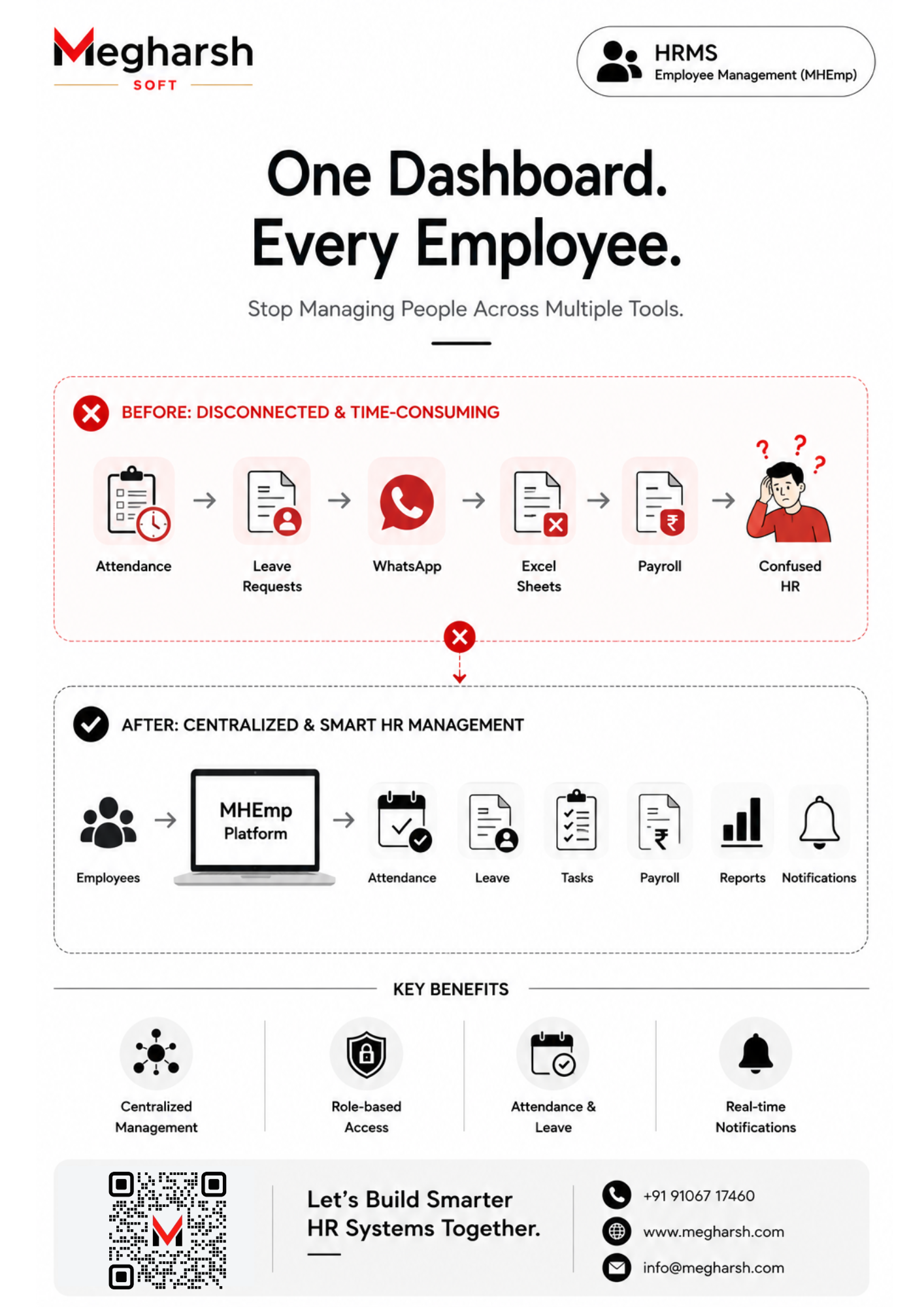
Many businesses still rely on spreadsheets, disconnected tools, and manual HR processes to track attendance, leaves, daily tasks, and payroll. As teams grow, these methods become difficult to maintain, increase administrative work, and make it harder to keep company data secure.
One of our recent projects focused on solving exactly this challenge by building a multi-tenant Employee CRM platform that allows multiple companies to operate independently while using the same application.
The Challenge
A traditional employee management system often works well for a single organization. However, businesses that manage multiple companies or clients require much more than basic HR functionality.
Some common challenges include:
- Keeping each company's employee data completely isolated and secure.
- Managing different user roles with different permissions.
- Tracking attendance, leaves, projects, and daily tasks in one place.
- Reducing manual HR work and paperwork.
- Keeping employees informed through real-time notifications.
Without a centralized platform, HR teams spend valuable time switching between multiple systems and manually updating records.
Why Multi-Tenant Architecture Matters
A multi-tenant system allows several companies to use the same software while ensuring that each company's data remains completely separate.
Think of it like an apartment building.
Every resident lives in the same building but has their own private apartment. They share the infrastructure, yet no one can access another resident's space.
The same concept applies to business software. Each company gets its own secure workspace without requiring a separate application or server.
This approach offers several advantages:
- Lower infrastructure costs
- Easier maintenance
- Faster feature updates
- Better scalability
- Strong data isolation
Building an Employee CRM Beyond Attendance
Modern HR software should do much more than mark employees present or absent. For this platform, we combined multiple day-to-day business operations into a single system:
Role-Based Access: Different users need different permissions. The platform supports roles such as Super Admin, Company Admin, Admin, Team Lead, and Employee. Each role only sees the information relevant to their responsibilities.
Attendance & Leave Management: Instead of maintaining manual registers or spreadsheets, employees can mark attendance, apply for leave, track leave status, and view holiday calendars. Managers can review and approve requests from one dashboard.
Project & Task Management: Employee productivity improves when work is organized. The CRM includes daily task logging, project management, activity tracking, and team updates.
Payroll Support: Salary management becomes simpler with digital records. Employees can securely access their salary slips, while administrators can upload payroll documents and maintain organized records.
Real-Time Notifications: Communication delays often lead to missed tasks and confusion. The platform delivers task assignment alerts, leave approval notifications, salary slip updates, and email notifications.
Better Insights for HR and Management
Collecting employee data is useful only if it helps make better decisions. The platform provides administrators with access to:
- Attendance reports
- Leave statistics
- Employee performance insights
- Downloadable salary documents
Having all this information in one place enables faster reporting and better workforce planning.
Technologies Behind the Platform
The application was developed using technologies chosen for stability and long-term scalability:
- Laravel & PHP: Enterprise backend framework and business logic
- MySQL: Robust relational data architecture
- Git: Version control and deployment management
Together, these technologies provide a secure and maintainable foundation for enterprise employee management solutions.
Final Thoughts
As businesses expand, employee management becomes increasingly complex. Relying on disconnected systems and manual processes often results in inefficiencies, communication gaps, and higher administrative costs.
A well-designed multi-tenant Employee CRM brings attendance, task management, payroll support, reporting, and communication together in one secure platform. Whether you're managing one organization or dozens, investing in the right employee management platform can significantly improve operational efficiency and team productivity.