
Too Many Transactions, Too Many Spreadsheets? Here's a Better Way to Stay in Control
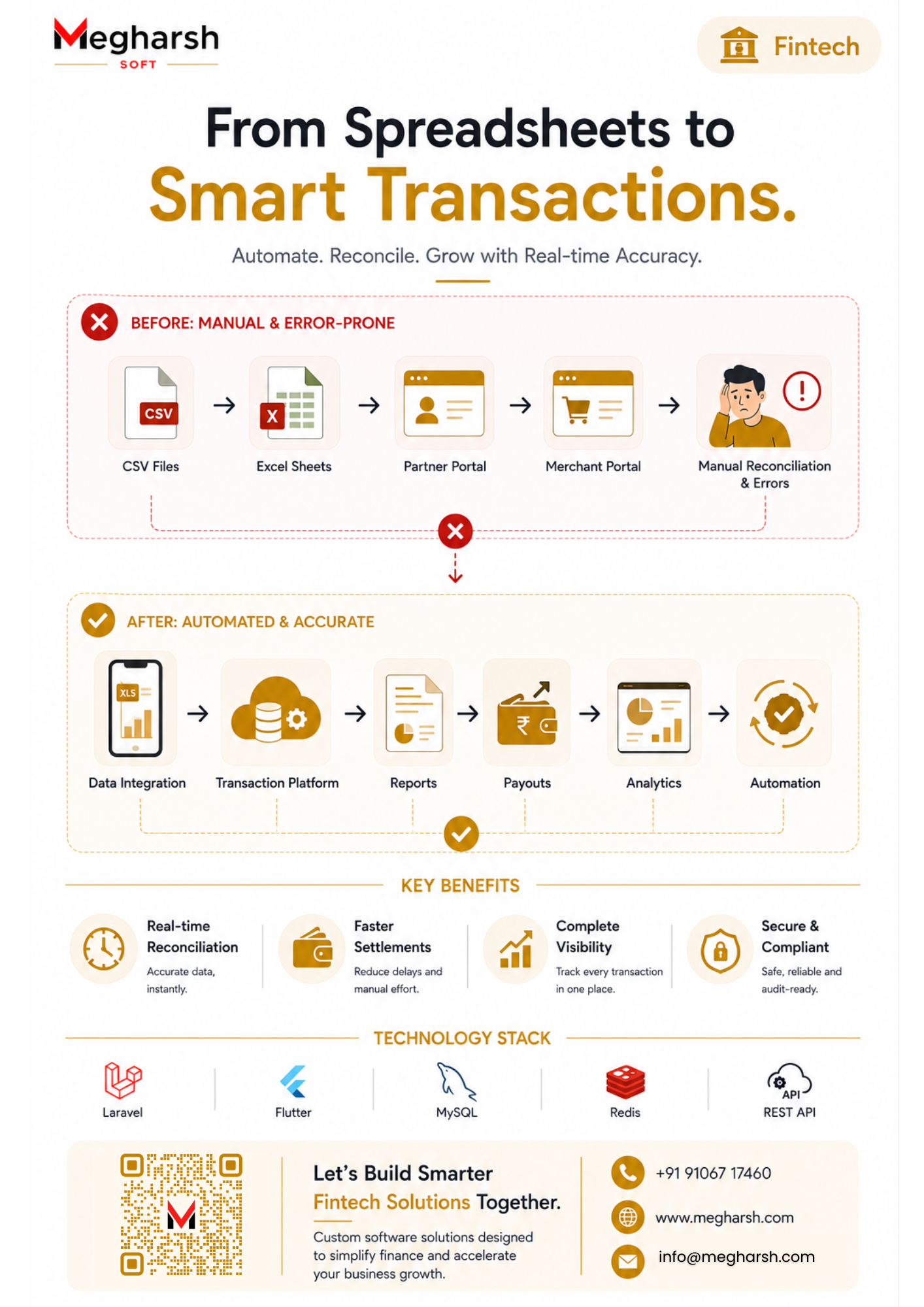
For many finance and operations teams, growth brings an unexpected challenge.
It's not processing more transactions—it's managing them.
As your business expands, transaction data starts flowing in from different merchants, publishers, partners, payment gateways, and internal systems. What once fit neatly into a spreadsheet soon becomes hundreds of files, manual imports, endless reconciliations, and hours spent generating reports.
The result? Your team spends more time organizing data than using it.
If this sounds familiar, you're not alone.
Why Transaction Management Gets More Difficult as You Grow
Most businesses don't wake up one day with a broken process. It happens gradually.
One spreadsheet becomes five. One partner becomes twenty. Monthly reports become weekly. Manual imports become daily.
Soon, your finance or operations team is juggling multiple systems just to answer simple questions like:
- Which transactions have been approved?
- Which publisher generated this sale?
- How much should each partner be paid?
- Which merchants are performing best?
- Are there duplicate or missing transactions?
When finding answers takes longer than making decisions, the process is no longer scalable.
⚠️ The Hidden Cost of Manual Transaction Management
Many businesses underestimate how much time is lost to repetitive work. Common pain points include:
- Importing transaction files manually
- Matching merchants, publishers, and offers by hand
- Preparing monthly payout reports
- Reconciling thousands of transactions
- Switching between multiple reporting tools
- Correcting errors caused by manual data entry
These tasks may seem manageable today, but as transaction volumes increase, they quickly become operational bottlenecks. Instead of focusing on growth, teams spend their time maintaining spreadsheets.
✅ What an Efficient Transaction Management System Should Include
The goal isn't simply to store transactions. It's to make transaction data accurate, accessible, and actionable. A modern platform should help automate routine work while giving every stakeholder the information they need:
Centralized Transaction Management: Rather than importing data into multiple spreadsheets, every transaction should flow into a single dashboard where teams can search, filter, and monitor activity in real time.
Automated Imports: Manual uploads slow down operations and increase the risk of mistakes. Automatically importing transaction data ensures information stays consistent and up to date.
Smart Transaction Mapping: Each transaction should automatically connect with the correct merchant, publisher, offer, and partner. This removes repetitive manual work while improving reporting accuracy.
Automated Payout Calculations: Calculating commissions manually every month is time-consuming and prone to errors. Automation ensures payouts remain accurate while reducing administrative effort.
Role-Based Access: Different stakeholders need different information. Finance teams, merchants, publishers, and administrators should each have dashboards designed for their responsibilities without exposing unnecessary data.
Real-Time Analytics: Reports shouldn't require hours of preparation. With live dashboards, businesses can instantly track transaction volume, revenue trends, merchant performance, publisher performance, and monthly payouts.
💡 A Real-World Solution
One fintech business faced many of these same challenges. As transaction volumes increased, managing merchants, publishers, offers, and monthly payouts became increasingly complex. Manual processes slowed reporting, made reconciliation difficult, and limited visibility into business performance.
To solve this, a centralized transaction management platform was developed that brought everything into one place. The platform included:
- Automated transaction imports
- Smart transaction mapping
- Secure role-based access
- Automated monthly payout calculations
- Advanced reporting with Power BI
- Real-time dashboards for merchants, publishers, and internal teams
Instead of relying on disconnected spreadsheets and manual workflows, the business gained a single platform for managing its entire transaction lifecycle.
Growth Shouldn't Mean More Manual Work
The more your business grows, the more important operational efficiency becomes. If your team spends hours importing transactions, preparing reports, reconciling data, or calculating payouts manually, the issue isn't your people—it's your process.
A centralized transaction management platform helps reduce manual work, improve reporting accuracy, and give every stakeholder the visibility they need to make faster decisions. When everything lives in one dashboard, your team can spend less time managing data—and more time growing the business.
Ready to Simplify Your Transaction Management?
If your finance or operations team is spending more time reconciling transactions than analyzing them, it may be time to rethink your workflow.
At Megharsh Soft, we've helped businesses build secure, scalable transaction management platforms that automate imports, simplify reporting, and provide real-time visibility across merchants, publishers, and partners.